From classrooms to later life, chess is one of the best-studied thinking games. Here is what peer-reviewed work suggests about children, older adults, attention, and why the board still matters in an AI-and-screens world.
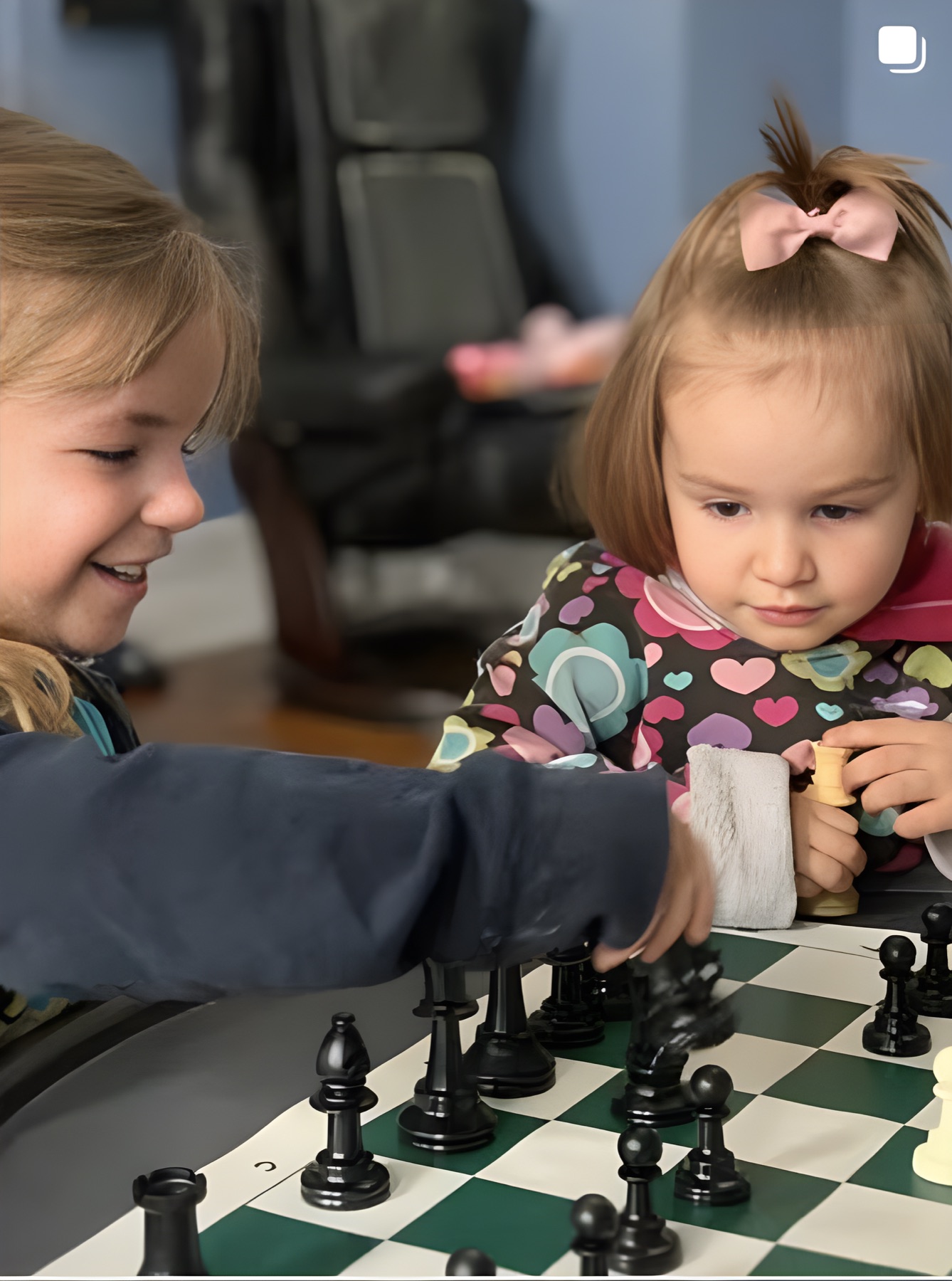
Young minds practicing attention, options, and calm under pressure
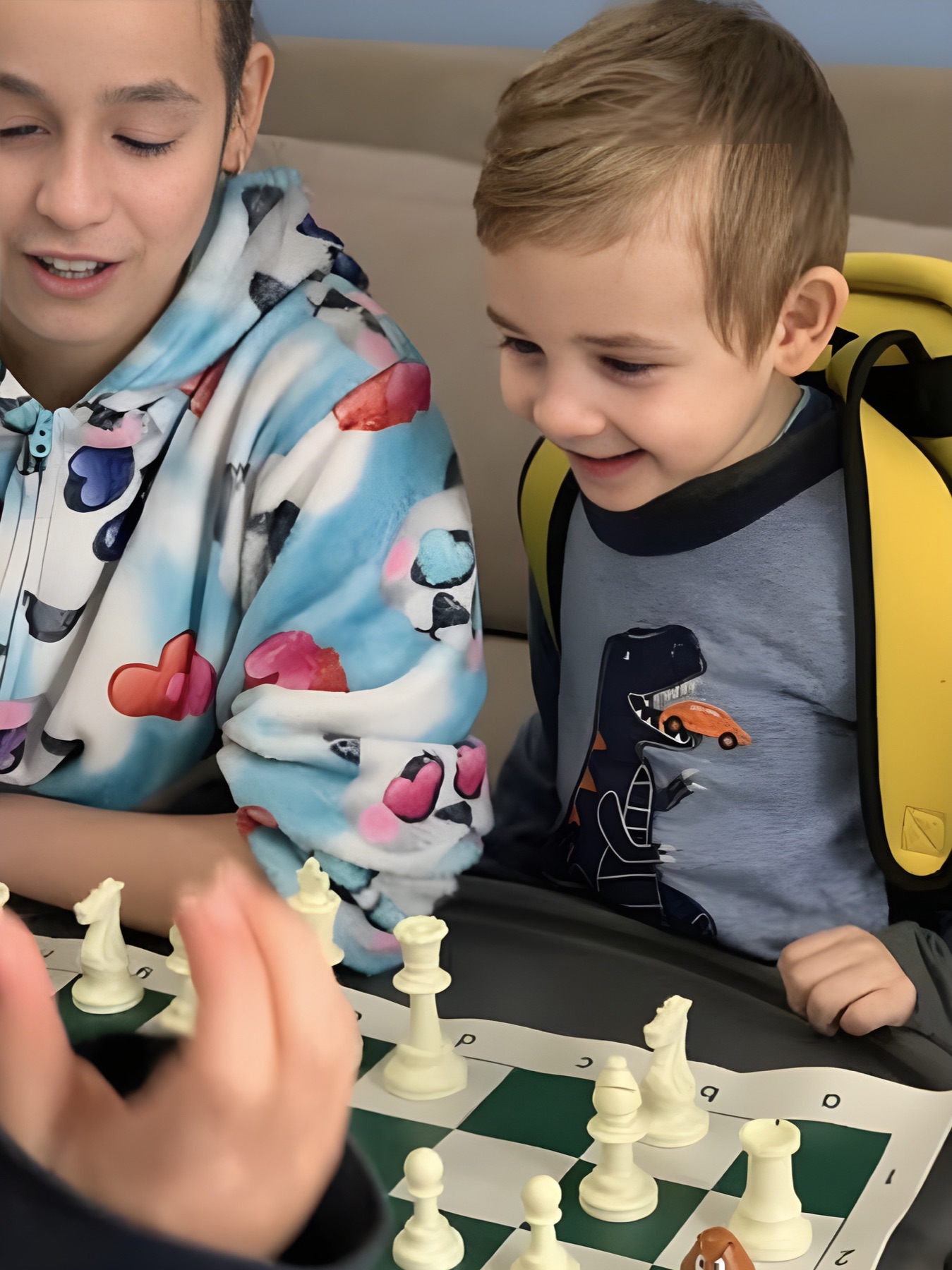
Social play that still demands real thinking
Chess for children & school-age minds
A major meta-analysis of school chess programs (24 studies, thousands of students) found a moderate overall benefit of chess instruction on cognitive and academic outcomes (Hedges’ g ≈ 0.34), with a tendency toward stronger effects on mathematics than on reading.1
Follow-up reviews emphasize an important practical detail: benefits scale with dosage. Roughly 25–30 hours of instruction — about a lesson a week across a school year — appears to be a meaningful threshold for observable gains.2
Researchers also urge honesty: not every study finds large “far transfer” to every school subject when experiments include strong active control groups. That does not make chess worthless — it means chess is best framed as training attention, planning, error-checking, and sportsmanship, with academic transfer that is real but not magic.34
Chess for older adults & brain health
In later life, cognitively stimulating leisure activities are repeatedly linked with healthier aging. A pilot chess-training program (12 weeks, two 60-minute sessions per week) for institutionalized and semi-institutionalized older adults reported improvements in general cognitive status and quality of life, with promising signals for attention, processing speed, and executive function.5
Broader reviews discuss chess practice as a candidate protective lifestyle factor related to dementia risk and cognitive reserve — social engagement plus demanding mental work in the same activity.6 Chess will not “cure” aging, but it is a structured way to keep challenge, community, and purpose on the calendar.
Why chess still matters in the AI era
Generative AI can answer homework. Infinite scroll can answer boredom. Chess answers a different need: you still have to choose. Engines can calculate, but the human player must evaluate plans, sit with uncertainty, and own the result.
That makes chess a rare screen-adjacent activity that rewards slow thinking over reflexive tapping. Students practice comparing options, delaying the first impulse, and recovering after mistakes — skills that transfer to study habits and life decisions even when curriculum “far transfer” results are modest in lab designs.14
For kids stuck on games & short-form video
Many parents are not anti-technology — they are anti-mindless technology. Chess offers a clear alternative: a game with rules, opponents, consequences, and measurable growth. Unlike endless mobile loops designed for dopamine spikes, a chess session has a beginning, a middle, and an end — plus a handshake.
Used as an after-school habit, chess can compete with passive screen time by filling the same “play” slot with something that still builds patience and focus. Pair it with clear boundaries (device-free lessons, short post-game review) and the board becomes a weekly reset for attention.
Focus & patience
Students practice slowing down, checking ideas, and resisting the first impulse.
Problem-solving
Every position is a puzzle: compare options, plan ahead, recover after mistakes.
Healthy aging
Stimulating play plus social connection — both matter for mood and cognition later in life.
Selected scientific references
Sala, G., & Gobet, F. (2016). Do the benefits of chess instruction transfer to academic and cognitive skills? A meta-analysis. Educational Research Review, 18, 46–57. https://doi.org/10.1016/j.edurev.2016.02.002
Sala, G., Foley, J. P., & Gobet, F. (2017). The effects of chess instruction on pupils’ cognitive and academic skills: State of the art and theoretical challenges. Frontiers in Psychology, 8, 238. https://doi.org/10.3389/fpsyg.2017.00238
Sala, G., & Gobet, F. (2017). Does chess instruction improve mathematical problem-solving ability? Two experimental studies with an active control group. Learning & Behavior, 45, 414–421. https://doi.org/10.3758/s13420-017-0280-3
Sala, G., & Gobet, F. (2017). Does far transfer exist? Negative evidence from chess, music, and working memory training. Current Directions in Psychological Science, 26(6), 515–520. https://doi.org/10.1177/0963721417712760
Cibeira, N., et al. (2021). Effectiveness of a chess-training program for improving cognition, mood, and quality of life in older adults: A pilot study. Geriatric Nursing, 42(4), 894–900. https://doi.org/10.1016/j.gerinurse.2021.04.026
Lillo-Crespo, M., et al. (2019). Chess practice as a protective factor in dementia. International Journal of Environmental Research and Public Health, 16(12), 2116. https://doi.org/10.3390/ijerph16122116